
Cataract surgery in Mumbai is one of the most common and successful eye operations you can have. Yet many people put it off for years because they are unsure what happens on the day, how long recovery takes, or which lens to choose. Cataract is still the leading cause of blindness in India: it accounted for 66.2% of blindness in people aged 50 and above in the National Blindness and Visual Impairment Survey 2015–19. Almost all of that vision loss can be reversed with timely surgery.
The short answer: modern cataract surgery is a day-care procedure done under local anaesthesia. Most people go home the same day and are back to light daily activities within a few days. Your vision usually settles over a few weeks. The most important decision you make is the intraocular lens (IOL). A monofocal lens gives clear vision at one distance. A multifocal or EDOF lens reduces your need for glasses but can cause halos at night. A toric lens corrects astigmatism.
This step-by-step guide walks you through the symptoms, the tests before surgery, what happens on surgery day, the recovery timeline, aftercare, and how to choose between the main IOL lens types.
What Is a Cataract, and What Are the Symptoms?
A cataract is a cloudy area in the natural lens of your eye. The lens sits behind the coloured part of the eye (the iris) and focuses light onto the retina. Most cataracts are age-related, but they can also follow an eye injury, long-term steroid use, diabetes or earlier eye surgery. You can have a cataract in one or both eyes, but it cannot spread from one eye to the other.
In the early stages, a cataract often causes no symptoms at all. As it grows, you may notice:
- Cloudy, blurry or dim vision, like looking through a fogged-up window
- Colours that look faded or yellowish
- Glare from headlights, lamps or sunlight, or halos around lights
- Trouble seeing at night, especially when driving
- Double vision in one eye
- Frequent changes in your glasses or contact lens prescription
These symptoms can also point to other eye conditions, such as glaucoma or retinal disease. That is why a full dilated eye examination is the only reliable way to confirm a cataract. If you notice sudden changes, such as flashes of light, sudden eye pain or a sudden loss of vision, see an eye doctor straight away.
When Is the Right Time for Cataract Surgery?
The right time is when the cataract starts to affect your daily life. That might mean difficulty reading, driving at night, working on a screen, recognising faces or moving around safely. Surgery is the only treatment that removes a cataract. Eye drops, diet changes and supplements cannot reverse it.
You may have heard that a cataract must be "ripe" before it can be removed. That advice comes from an older era of surgery, when the whole lens was taken out through a large incision. Modern surgeons no longer wait for a cataract to ripen. In fact, a very dense, hard cataract can be more difficult to remove and needs more ultrasound energy.
On the other hand, if a cataract is mild and is not bothering you, there is usually no harm in waiting and monitoring it with regular eye check-ups. People whose work depends on fine vision, or who drive often at night, may choose to have surgery earlier. Your ophthalmologist will help you weigh this based on your vision, your lifestyle and the health of the rest of your eye.
Before Surgery: Your Consultation and Pre-Operative Tests
A good result starts with careful measurements. At your pre-surgery assessment, your eye surgeon will examine both eyes and run a set of tests. These confirm that the cataract is the cause of your symptoms and help calculate the exact power of your new lens.
Common tests include:
- Vision and refraction: measures how well you see now, with and without glasses.
- Slit-lamp and dilated eye examination: checks the cataract, cornea, retina and optic nerve.
- Eye pressure (tonometry): screens for glaucoma.
- Biometry: measures the length of your eye, usually with an optical biometer. A-scan ultrasound is used when the cataract is too dense for optical measurement.
- Keratometry or corneal topography: measures the curve of your cornea and shows whether you have astigmatism.
- Macular OCT scan (where needed): checks the central retina, which affects how well a premium lens can perform.
- Specular microscopy (where needed): counts the cells on the inner layer of the cornea.
This is also the right time to discuss lens choices, your daily visual needs and any other health conditions, such as diabetes or blood pressure.
Tell your surgeon if you: wear contact lenses (you may need to stop wearing them for a few days before the measurements), have had LASIK or another refractive procedure, take blood thinners, or take medicines for an enlarged prostate. Some of these can affect the lens calculation or the surgery itself.
Cataract Surgery Day: What Happens, Step by Step
Cataract surgery is a day-care procedure. You stay awake, but your eye is numbed so you should not feel pain. Because it is usually done under local anaesthesia, you can normally eat and drink as usual beforehand, unless your surgeon tells you otherwise. Plan for someone to accompany you and take you home.
Here is what typically happens:
- Preparation: drops widen (dilate) your pupil. Your eye and the skin around it are cleaned, and a sterile drape covers your face, leaving only the eye being treated exposed.
- Anaesthesia: numbing drops, a small injection, or both, so the eye is comfortable throughout.
- A tiny incision: the surgeon makes a small opening at the edge of the cornea, usually just a few millimetres wide and self-sealing, so stitches are rarely needed.
- Opening the lens capsule: a round opening is made in the thin, clear bag (capsule) that holds the natural lens.
- Removing the cataract: in phacoemulsification ("phaco"), an ultrasound probe breaks the cloudy lens into tiny pieces and gently suctions them out.
- Placing the new lens: a folded IOL is inserted through the same small incision. It unfolds inside the capsule and stays there permanently.
- Finishing up: antibiotic is given, and the eye may be covered with a shield.
During the operation you may see light, movement and changing colours, but you will not see the instruments in detail. The surgery itself usually takes well under an hour (the NHS gives a typical range of 20 to 45 minutes), and you will spend a little longer at the hospital for preparation and a short rest afterwards. If both eyes need surgery, they are done on separate days.
Phaco, micro-incision and laser-assisted surgery
- Phacoemulsification is the standard modern technique worldwide. Prof. (Dr.) Keiki R. Mehta, founder of Mehta International Eye Institute, is widely regarded as the pioneer of phacoemulsification in India.
- Micro-incision phaco uses an even smaller opening. At our institute, microphaco is performed through an incision of about 1.2 mm.
- Femtosecond laser-assisted cataract surgery (FLACS) uses a laser for some steps, such as the incisions, the capsule opening and softening the cataract. The removal of the cataract and the lens placement then proceed as in standard surgery. A 2023 Cochrane review of 42 studies found probably no clinically important difference between laser-assisted and standard phaco in complications, vision or quality of life, while laser surgery costs more. Your surgeon can tell you whether it offers any particular advantage for your eye.
IOL Lens Types: Monofocal, Multifocal, EDOF and Toric
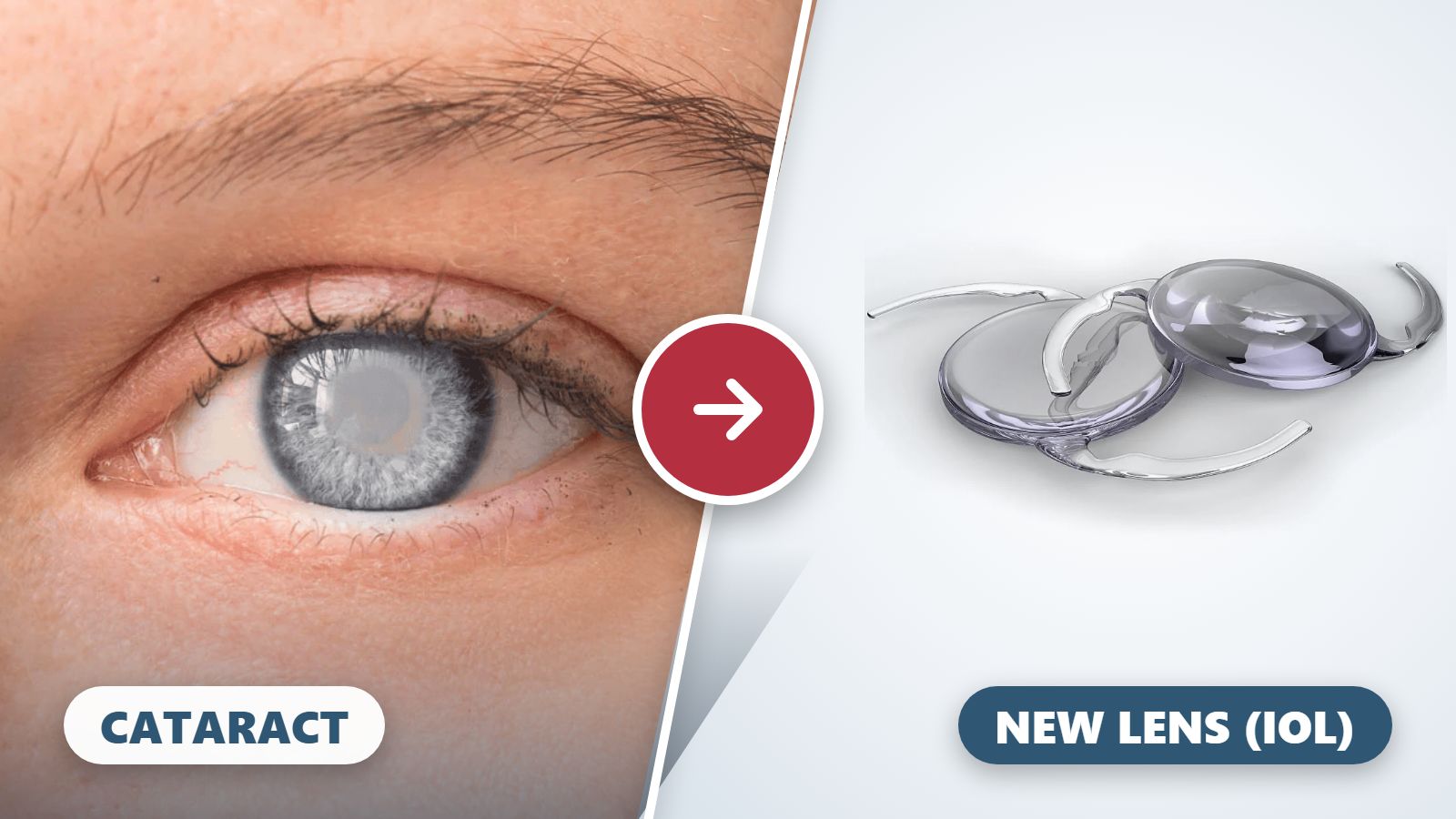
An intraocular lens (IOL) is a tiny, clear artificial lens that replaces your cloudy natural lens. It is designed to stay in your eye for life. Most IOLs are made of acrylic or silicone, and many are foldable, so they fit through a small incision. The lens you choose decides how you see after surgery, and how much you will still rely on glasses.
Monofocal IOLs
A monofocal lens has a single point of focus. It is the most commonly implanted IOL worldwide and has decades of proven results. Most people choose to have it set for clear distance vision and then wear glasses for reading and close work.
- Best for: people who are comfortable wearing reading glasses, drive frequently at night, or have other eye conditions.
- Trade-off: you will need glasses for at least one distance, usually near.
Monovision is a variation in which one eye is set for distance and the other for near. Many people adapt well, but some find it uncomfortable or notice reduced depth perception. It is often worth trying with contact lenses first.
Multifocal (bifocal and trifocal) IOLs
A multifocal lens has several focusing zones built in, much like bifocal or varifocal glasses. A trifocal lens adds a zone for intermediate distances, such as a computer screen or a car dashboard. The aim is to reduce your dependence on glasses for most daily tasks.
- Best for: people who want to be largely free of glasses and are willing to accept some night-time visual effects.
- Trade-off: halos and glare around lights, and slightly reduced contrast, especially at night or in dim light. Most people adapt over time, but not everyone does.
- Not usually advised for: people with glaucoma, macular degeneration, significant diabetic retinal changes or other eye disease, because these lenses split the incoming light and need a healthy retina to work well.
Extended depth-of-focus (EDOF) IOLs
An EDOF lens stretches a single focus to give good distance and intermediate vision. It is often a middle path between a monofocal and a multifocal lens.
- Best for: people who spend a lot of time on screens, cooking or driving and want good vision across those ranges.
- Trade-off: reading glasses may still be needed for fine print. Glare and halos are possible, though designs differ.
A 2024 Cochrane review comparing trifocal and EDOF lenses found that both may give similar distance vision, while trifocal lenses may give better near vision. Both lens types can cause halos and glare, with no meaningful difference found between them. The evidence is still limited, so your surgeon's assessment of your eyes matters more than the lens label.
Toric IOLs
A toric lens has extra built-in correction for astigmatism, a common condition in which the cornea is shaped more like a rugby ball than a football. Toric designs are available in monofocal, multifocal and EDOF versions.
- Best for: people with moderate or higher regular corneal astigmatism. About 1.0 dioptre or more is a common threshold, and many cataract patients fall in this range.
- Trade-off: the lens must sit at a precise angle inside the eye. If it rotates even slightly, part of the correction is lost, and a small repositioning procedure is occasionally needed.
- Not usually advised for: irregular astigmatism caused by corneal scars, keratoconus or other corneal disease.
How to Choose the Right Lens for Cataract Surgery
There is no single "best" IOL. The right lens is the one that matches the health of your eye, your daily activities and how you feel about wearing glasses.
| Factor | Monofocal | Multifocal / trifocal | EDOF | Toric |
|---|---|---|---|---|
| Clear vision at | One distance (usually far) | Far, near, and intermediate with trifocals | Far and intermediate | Corrects astigmatism; comes in monofocal and premium versions |
| Glasses after surgery | Usually for reading | Often not needed for most tasks | Often for fine print | Depends on the base design |
| Halos and glare at night | Least likely | More likely | Possible | Same as the base design |
| Night driving | Well suited | Can be harder at first | Usually manageable | Same as the base design |
| Suitable with other eye disease | Usually yes | Often not advised | Case by case | Depends on corneal shape |
| Relative cost | Lowest | Higher | Higher | Higher than a standard monofocal |
Questions to ask yourself
- How do I feel about glasses? If you don't mind reading glasses, a monofocal lens gives excellent quality vision. If being free of glasses matters a lot, ask about multifocal or EDOF options.
- What do I do most each day? Reading, sewing and phone use need near vision. Computer work and cooking need intermediate vision. Driving and sports need distance vision.
- Do I drive a lot at night? If so, the halos linked with multifocal lenses may bother you more.
- Do I have astigmatism? If your corneal measurements show significant regular astigmatism, a toric version of your chosen lens can sharpen your uncorrected vision.
- Do I have other eye conditions? Glaucoma, macular degeneration, diabetic eye disease or a history of retinal problems usually make a monofocal lens the safer choice.
- Have I had LASIK or other laser vision correction? Lens calculations are more complex after refractive surgery, so tell your surgeon and bring old records if you have them.
Your surgeon will combine your answers with your test results to recommend a lens. A good surgeon will also tell you clearly when a premium lens is not right for your eyes.
Cataract Surgery Recovery Time: What to Expect
Most people return to light daily activities within a few days, and vision usually settles over a few weeks. Full healing inside the eye takes longer, so follow your surgeon's instructions until you are told otherwise. Everyone heals at a different pace, and the timings below are general guidance.
| When | What is normal | What you can usually do |
|---|---|---|
| Surgery day | Blurry vision for a few hours from the dilating drops; mild grittiness or watering | Go home the same day with someone accompanying you; rest; wear the eye shield as advised |
| First 1–2 days | Mild redness and a scratchy feeling; vision starting to clear | Attend your first check-up; walk gently; watch TV or use a phone in moderation; shower while keeping water off the eye; avoid bending with your head below your waist for the first 48 hours |
| First week | Vision improving day by day; light sensitivity | Light household tasks; wear sunglasses outdoors; avoid heavy lifting, dusty places and strenuous activity |
| After about 1 week | Comfort improving | Running, cycling and similar exercise, if your surgeon agrees |
| After about 2 weeks | Most redness gone | Swimming, if your surgeon agrees |
| About 4 weeks | Vision largely stable; eye drops usually finish around now | Final check-up; get your new glasses prescription |
A few practical points:
- Driving: don't drive until your surgeon confirms your vision meets the legal standard. If your other eye still has a strong prescription, you may feel unbalanced until both eyes are done.
- Work: many people with desk-based jobs are back at work in about a week; ask your surgeon what suits your eye. Jobs that involve heavy lifting, dust or chemicals may need more time off.
- The second eye: if both eyes need surgery, the second is usually done once the first has settled, often within a few weeks.
- New glasses: wait until your surgeon says your vision is stable, usually a few weeks after surgery, before getting a new prescription.
Aftercare: Dos and Don'ts After Cataract Surgery
Good aftercare protects your eye while it heals and lowers the risk of infection.
Do
- Use your eye drops exactly as prescribed, usually for about four weeks. Wash your hands before each dose and don't let the bottle tip touch your eye.
- Wear the protective shield while sleeping for as long as your surgeon advises.
- Wear sunglasses outdoors if light feels too bright, and to keep out dust and wind.
- Take simple painkillers such as paracetamol for mild discomfort, if your doctor agrees.
- Keep all your follow-up appointments, even if you feel fine.
Don't
- Rub, press or touch your eye.
- Let water, soap or shampoo get into the eye for the first week or two.
- Swim or use a steam room until your surgeon allows it.
- Wear eye makeup until your surgeon says it is safe.
- Lift heavy objects or do strenuous exercise in the first week.
- Expose the eye to smoke, dust or chemicals, for example while cleaning the house or travelling on dusty roads.
Contact your eye surgeon straight away if you notice
- Increasing pain that painkillers don't relieve
- Vision that gets worse instead of better
- Increasing redness, swelling or discharge
- Sudden new floaters, flashes of light, or a dark curtain or shadow across your vision
The last group of symptoms can be signs of a retinal detachment, which needs urgent treatment.
Is Cataract Surgery Safe? Risks and "Second Cataract"
Cataract surgery is one of the safest and most effective operations in medicine, and serious complications are rare. Like any surgery, it does carry some risk. Possible complications include inflammation, swelling of the cornea or retina, raised eye pressure, a change in the lens position, retinal detachment and infection.
A serious eye infection (endophthalmitis) is very uncommon. A large US registry study of more than 8.5 million eyes found it in about 0.04% of cataract surgeries, or roughly 1 in 2,500. Careful sterile technique and antibiotic drops help keep this risk low.
Posterior capsule opacification (PCO)
The most common later problem is posterior capsule opacification, often called a "second cataract" or "after-cataract". The cataract does not grow back. Instead, the thin capsule that holds your new lens slowly becomes cloudy, months or years after surgery, and your vision becomes hazy again.
PCO is easily treated with a quick, painless outpatient procedure called YAG laser capsulotomy. The laser makes a small opening in the cloudy capsule, and vision usually clears within a day or so. No incision is needed.
How to Choose the Best Cataract Surgeon in Mumbai
Mumbai has many eye hospitals, so it helps to know what to look for. The best cataract surgeon in Mumbai for you is the one who takes time to understand your eyes and your lifestyle, not simply the one offering the most expensive lens.
Look for:
- Experience: a surgeon who performs cataract surgery regularly and handles complex cases, such as hard cataracts, weak lens support or eyes with glaucoma.
- A thorough pre-operative assessment: accurate biometry, corneal measurements and a retina check before any lens is recommended.
- A full range of lens options: monofocal, multifocal, EDOF and toric lenses, with honest advice about which suit your eyes.
- Clear, transparent costs: a written estimate that shows the lens type, surgery, medicines and follow-up visits.
- Accreditation and hygiene standards: NABH accreditation is one useful sign of quality and safety processes.
- Proper aftercare: scheduled follow-ups and an easy way to reach the team if you have a concern.
Cataract surgery at Mehta International Eye Institute, Colaba
Mehta International Eye Institute has served patients in Mumbai for over 46 years and is NABH accredited. Our founder and Medical Director, Prof. (Dr.) Keiki R. Mehta, received the Padma Shri in 2008 and is widely regarded as the father of phacoemulsification in India.
At our Colaba institute, cataract surgery is planned around your eyes and your lifestyle. Your treatment begins with a detailed pre-operative work-up, including biometry and corneal measurements. Your surgeon then talks you through the lens options suitable for you, including monofocal, multifocal and toric IOLs, and the surgical approach for your cataract. Learn more on our cataract treatment page.
Frequently Asked Questions
How long does cataract surgery take?
The operation itself usually takes well under an hour, and often less for a straightforward cataract. Plan to spend a few hours at the hospital in total for preparation, the surgery and a short rest before you go home the same day.
Is cataract surgery painful?
No. Your eye is numbed with drops, an injection or both, so you should not feel pain. You may feel slight pressure and see lights and movement. Mild grittiness or discomfort for a few days afterwards is normal and usually eased by simple painkillers.
What is the cataract surgery recovery time?
Most people return to light daily activities within a few days and to most normal routines in about a week. Vision usually stabilises over a few weeks, and eye drops are typically used for around four weeks. Your surgeon will tell you when it is safe to drive, exercise and swim.
Is a multifocal lens good for cataract surgery?
A multifocal lens can be an excellent choice if you want to reduce your dependence on glasses and your eyes are otherwise healthy. It is not ideal for everyone. Halos and glare at night are common, and it is usually not advised if you have glaucoma, macular degeneration or other retinal disease. A detailed eye examination will show whether you are a good candidate.
Will I need glasses after cataract surgery?
It depends on the lens you choose. With a monofocal lens set for distance, you will usually need reading glasses. Multifocal and EDOF lenses reduce the need for glasses for many tasks, though some people still use them for fine print or in low light.
Can a cataract come back after surgery?
No, the cataract itself cannot come back because the natural lens has been removed. However, the capsule behind the new lens can become cloudy months or years later. This is called posterior capsule opacification, and a quick, painless YAG laser treatment clears it.
Can I have cataract surgery if I had LASIK before?
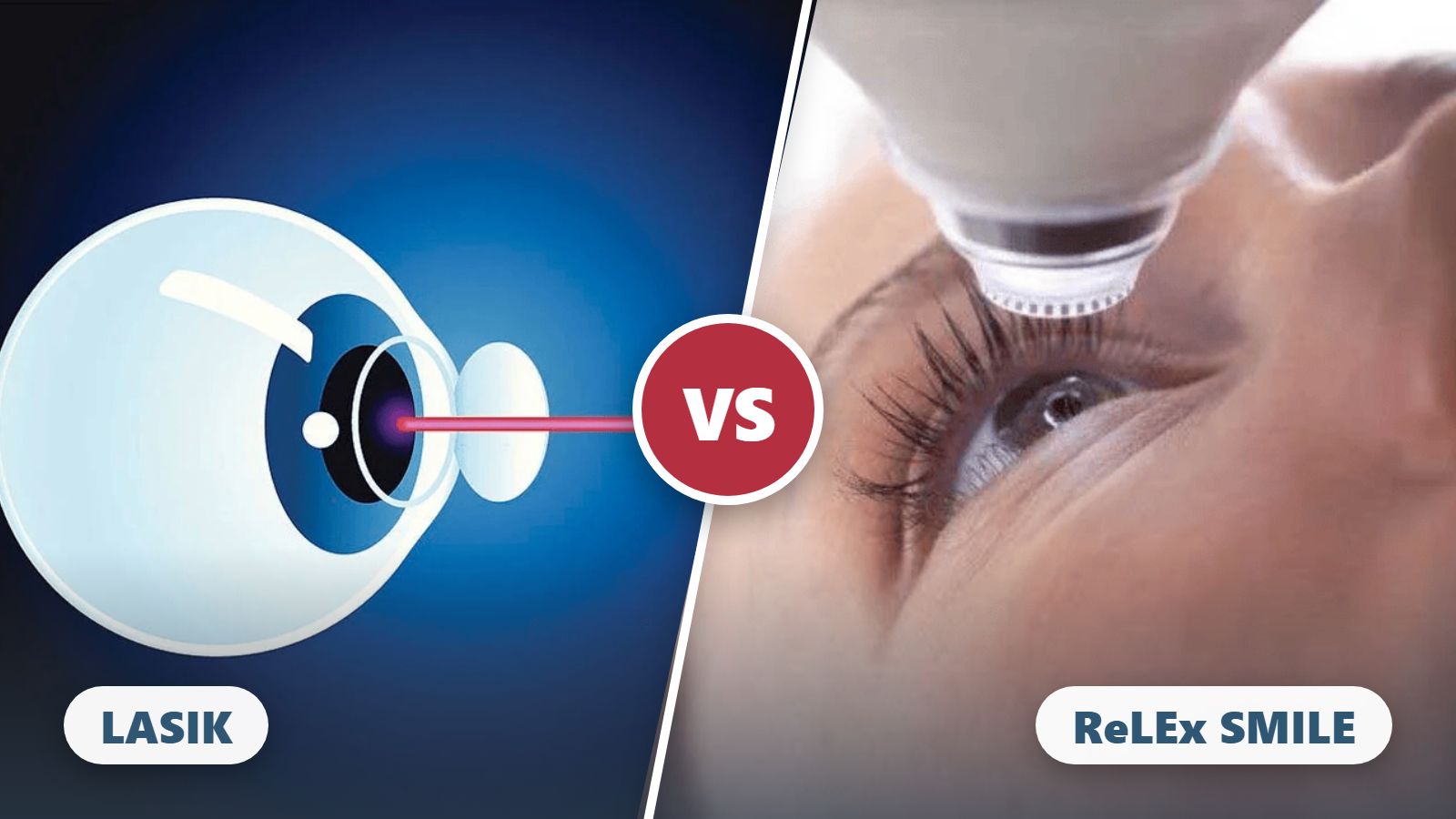
Yes. Previous LASIK or other laser vision correction changes the shape of the cornea, which makes lens power calculations more complex. Tell your surgeon about any past eye surgery and bring your old records if you have them. If you are still deciding on laser vision correction, read our guide to LASIK vs ReLEx SMILE.
Book Your Cataract Consultation in Mumbai
If blurry vision, glare or night-driving difficulty is affecting your daily life, a cataract evaluation is the first step. Consult our internationally renowned eye specialists in Colaba, Mumbai.
Book your cataract consultation today:
- Phone: +91 91371 88334 / 022 2215 1303
- WhatsApp: +91 98200 21041
- Online: Make an appointment
- Visit us: Sea Side Building, 147, Shahid Bhagat Singh Road, near Colaba Bus Station, Colaba, Mumbai 400005
This article is for general information only and is not a substitute for a personal consultation. Recovery times, lens suitability and risks vary from person to person; please follow the advice of your own eye surgeon.